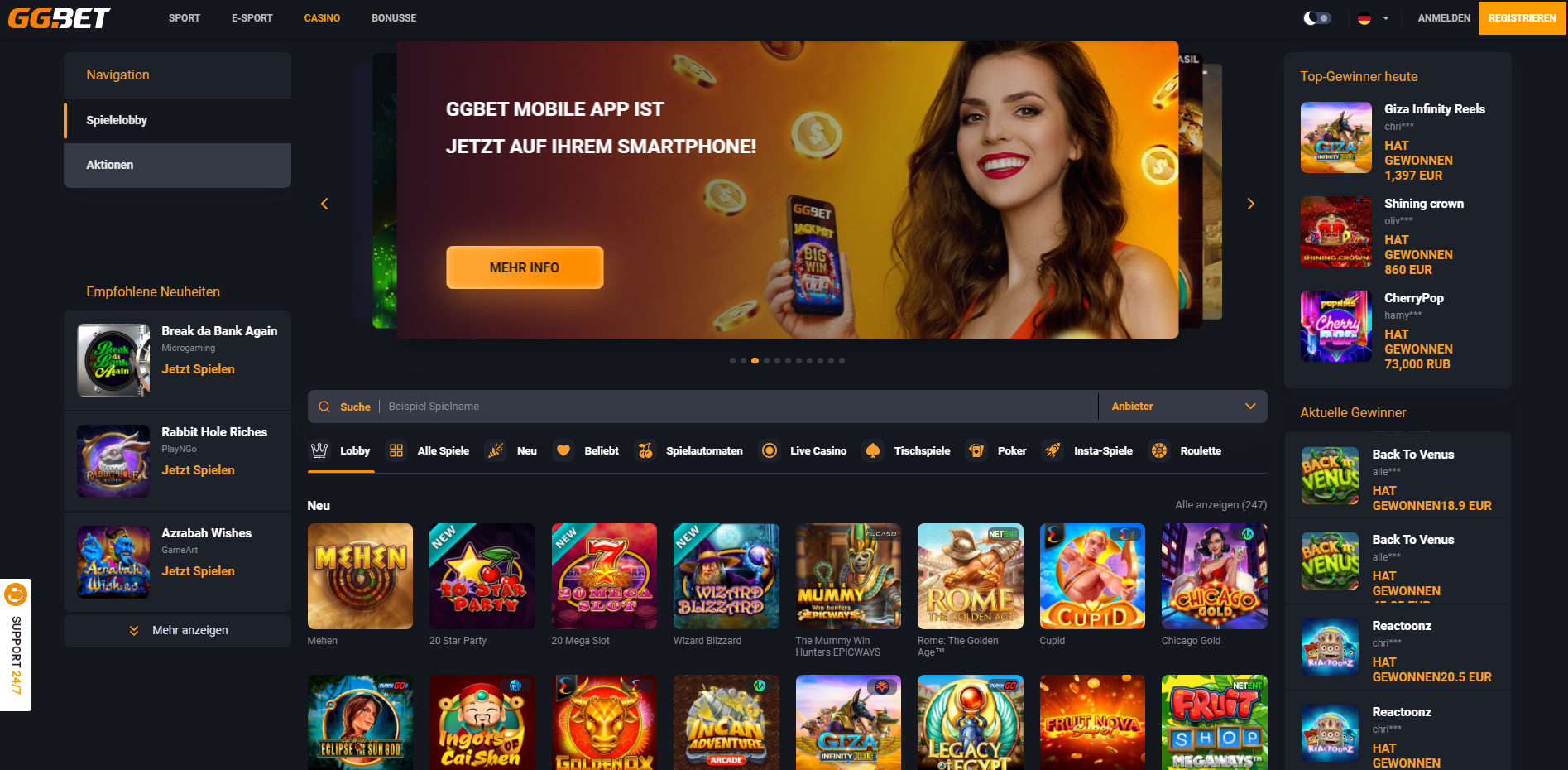
We reviewed the GGBet Casino website, focusing on its Irish-facing section ggbett.org. Our objective was to understand how its URL structure and technical SEO setup affect its presence and user experience for players in Ireland. This analysis includes the core structure and localization tactics to delineate its technical foundation.
The ‘/en-ie/’ Subdirectory: Localization for the Irish Audience
The ‘/en-ie/’ path is the heart of GGBet’s Irish targeting. It tells users and search engines the content is designed for Ireland. This subdirectory holds all the main pages for this market, from the homepage down to specific game categories.
How Effective is This Localisation?
Technically, using ‘en-ie’ uses recognized ISO language and country codes, which search engines recognize. That specificity helps. But real localization goes beyond the URL. We need to see if the content on these pages—the currency, payment methods, promotions, and cultural nods—actually aligns with what Irish users expect.
Beyond the Code: Content and Currency Consistency
A URL such as ‘/en-ie/casino’ should offer a local-feeling experience. We check for the Euro (€) as the default currency, indications of payment methods popular in Ireland, and support for Irish customer service options. The URL structure sets an expectation; the page content has to meet it.
Common Questions
How to interpret the ‘/en-ie/’ in the GGBet URL?
It employs ISO codes: ‘en’ for English and ‘ie’ for Ireland. This indicates to search engines that the page targets English-speaking users in Ireland, aiding local search rankings.
Why does GGBet use a .org domain instead of .com or .ie?
Using a .org domain is atypical for a commercial casino. This might be a branding choice. For SEO, the top-level domain matters less than having consistent, good content and strong backlinks for ranking power.
Do the game page URLs follow SEO best practices?
They ought to be static and descriptive, such as ‘/en-ie/slots/gonzos-quest’. Clean URLs are simpler for users to recall and share. They are also simpler for search engines to parse and index, potentially enhancing how individual games appear in search results.
What method does the site use to handle duplicate content?
It is expected to use canonical tags. These HTML tags in the page code indicate to search engines which URL version is the canonical one. This avoids issues where similar pages compete with each other in search rankings.
Is the GGBet site secure for Irish players?
Look for the ‘https://’ prefix and a padlock icon in your browser’s address bar. This verifies an SSL certificate is active, encrypting data between you and the website. It’s a basic security and trust feature, and Google uses it as a ranking factor.
Does the site work well on mobile phones?
It is expected to use responsive design. That means the same URL (ggbett.org/en-ie/) adjusts to fit any screen size. This gives a consistent experience and is what Google recommends, as it avoids the hassle of running separate mobile URLs.
What should I do if I find a broken link on the site?
Broken links harm user experience and SEO. If you discover one, notify GGBet’s customer support. A well-cared-for site consistently monitors and resolves broken links to preserve its structure for search engines and maintain user engagement.
Navigational Formats and UX
Clear, predictable URLs matter for UX and SEO. We looked at the structures for primary sections. For example, the path to live casino games clearly appears as ‘/en-ie/live-casino’. This descriptive clarity helps users know where they are on the site.
- Predictability: URLs like ‘/en-ie/slots’ and ‘/en-ie/promotions’ are intuitive.
- Hierarchy: The organization suggests a logical information architecture, transitioning from main areas to particular ones.
- Readability: Using hyphens to separate words (‘live-casino’) renders the URL easier to read for people and for search engines.
This coherent setup makes the site easier for visitors to navigate and builds a cleaner internal linking environment. That helps spread page authority across the site more efficiently.
Static vs. Dynamic Parameters: A Look at Game Pages
Game pages, like individual slot titles, often reveal how a site handles dynamic content. We search for clean, static URLs instead of long, parameter-heavy strings that can generate duplicate content and crawlability problems.
Recognizing Clean Game URLs
The best structure appears as ‘/en-ie/slots/book-of-dead’. This utilizes a static, descriptive path that’s straightforward to link to and index. It sidesteps putting session IDs, tracking parameters, or sort orders in the main URL, which can divide a page’s perceived value.
If parameters are needed for filtering (by game provider, for instance), the site should use canonical tags to refer back to the main, clean version. This blocks search engines from indexing many slightly different versions of the same page, which weakens ranking potential.
SSL/TLS Setup and URL Security
Security is vital for a site dealing with money. The HTTPS prefix in the URL, supported by a valid SSL/TLS certificate, is a basic ranking factor and a key indicator of trust. We ensured that all pages on the Irish site load securely.
Users view a padlock icon in the browser’s address bar. Technically, this means data between the user and the site is encrypted. Search engines favor secure sites, and many modern browser features only work on HTTPS connections. This makes it a foundational SEO requirement.
Canonicalization and Preventing Content Duplication
With various potential entry points and parameter issues, rel=canonical tags are crucial. These HTML elements tell search engines what the primary version is, pulling together ranking signals. We verified if GGBet’s Irish site uses them correctly.
- WWW vs. Non-WWW: The site should choose a single version as canonical.
- HTTP vs. HTTPS: The secure (HTTPS) version is always be the canonical.
- Parameter Variations: Filtered or sorted page views need to canonicalize the primary view.
- Trailing Slashes: The site must be consistent with the trailing slash (‘/’).
Proper URL canonicalization directs the SEO value the Irish site earns on the correct URLs. It prevents pages from competing against each other and improves the site’s SEO for specific keywords.
Comprehending the GGBet Domain and Core Structure
The main domain for the Irish market is ggbett.org, which is different from other regional versions. Choosing a .org domain for a commercial casino operation stands out, a point we’ll consider. The site’s core structure seems constructed around key user goals: reaching the casino, browsing promotions, and identifying specific games.
Key Domain and Subdirectory Strategy
GGBet uses a subdirectory strategy for regional targeting. The ‘/en-ie/’ path clearly designates content for English-speaking users in Ireland. This is a typical and effective method for geo-targeting on a single domain, aiding search engines identify the intended audience for those pages.
This method keeps all authority on the main domain while tidily organizing content. It avoids the difficulties of separate country-code domains (like .ie), which can be more difficult to build up and maintain from an SEO authority standpoint for an international brand.
Page Load Speed and URL-Linked Resources
The URL alone doesn’t dictate speed, but the resources it references do. The structure can affect how efficiently images, CSS, and JavaScript files load. Neat, orderly paths often suggest a more streamlined technical backend.
Effect of Resource Management
Messy image URLs with unnecessary parameters can hinder optimization like lazy loading or efficient caching. We seek static, structured resource paths (for example, ‘/en-ie/assets/images/slot-icon.jpg’). This points to a technically sophisticated setup that cares about performance.
Quick pages prevent users from leaving and are a direct Google ranking factor. A well-organized URL structure often accompanies a streamlined approach to hosting and distributing content. That helps both SEO and user satisfaction.
Mobile Compatibility and Adaptive URL Structure
A significant share of casino navigation and play occurs on smartphones. The site should work smoothly on all display sizes. Critically, the same URL should accommodate both desktop and mobile players. This is referred to as responsive design.
Using different mobile URLs (like an ‘m.’ subdomain) is an outdated practice that splits authority and complicates tracking. We confirmed that loading the site from a phone renders the responsive version at the identical ‘/en-ie/’ URL. This ensures a consistent point of access for all players, which is better for SEO.
Potential Red Flags and Optimization Opportunities
Our review isn’t complete without spotting possible enhancements. Drawing from common issues in similar site structures, we point out potential worries. These may not be present on GGBet, but they are worth examining.
- Broken Internal Links: Links directing to missing pages inside the ‘/en-ie/’ folder damage user interaction and waste search engine crawl budget.
- Inconsistent Breadcrumbs: Breadcrumb navigation should correspond to the URL format; if they do not, they can confuse users and search bots.
- Missing Hreflang for Other Regions: If the site targets other countries, proper hreflang tags are necessary to define geographic focus and stop different territories from competing.
- Shallow or Deep Nesting: Very deep page structures (like ‘/en-ie/category/subcat/game/variant/’) can make pages challenging to find and for search engines to scan.
Fixing these issues improves the site’s framework. That helps it more effective for search engines to catalog and for Irish visitors to navigate, supporting better organic visibility.
Leave a Reply